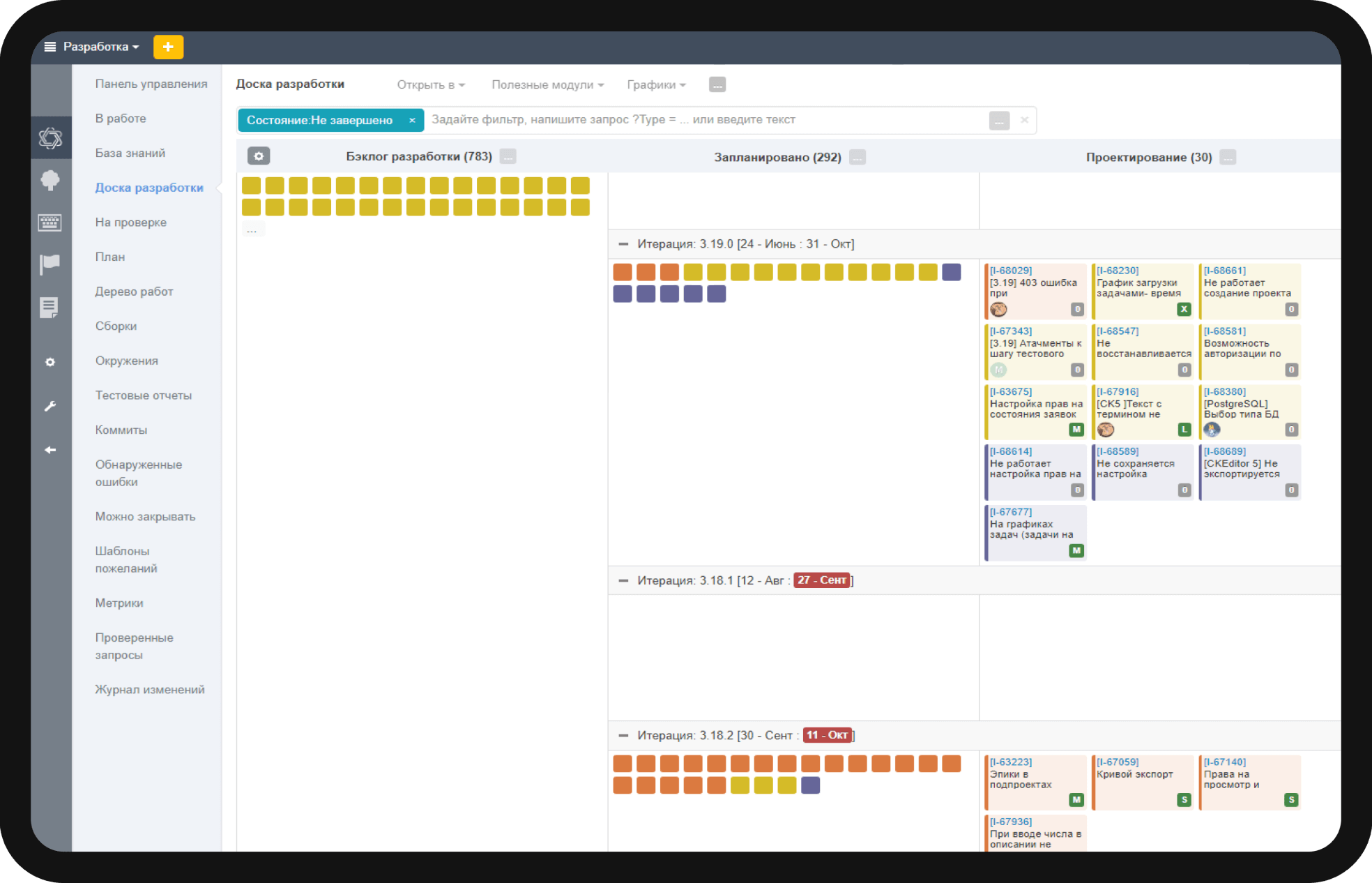
Software for engineering teams
We help you deliver software and hardware with transparency, control, and efficiency, reducing risk and raising the quality of your products.

ALM
AI-powered lifecycle management platform
for software and hardware–software systemsRMS
AI-powered professional requirements management for software and hardware systemsITSM
AI-powered professional ITSM for software maintenance and IT assets managementAgile
Free Scrum, Kanban, and Scrumban tooling—with everything your team needs in one place
AI-driven software
company
We build the Engio ALM platform to automate engineering workflowsacross design, development, quality assurance, and operations extensively using AI.
Product news
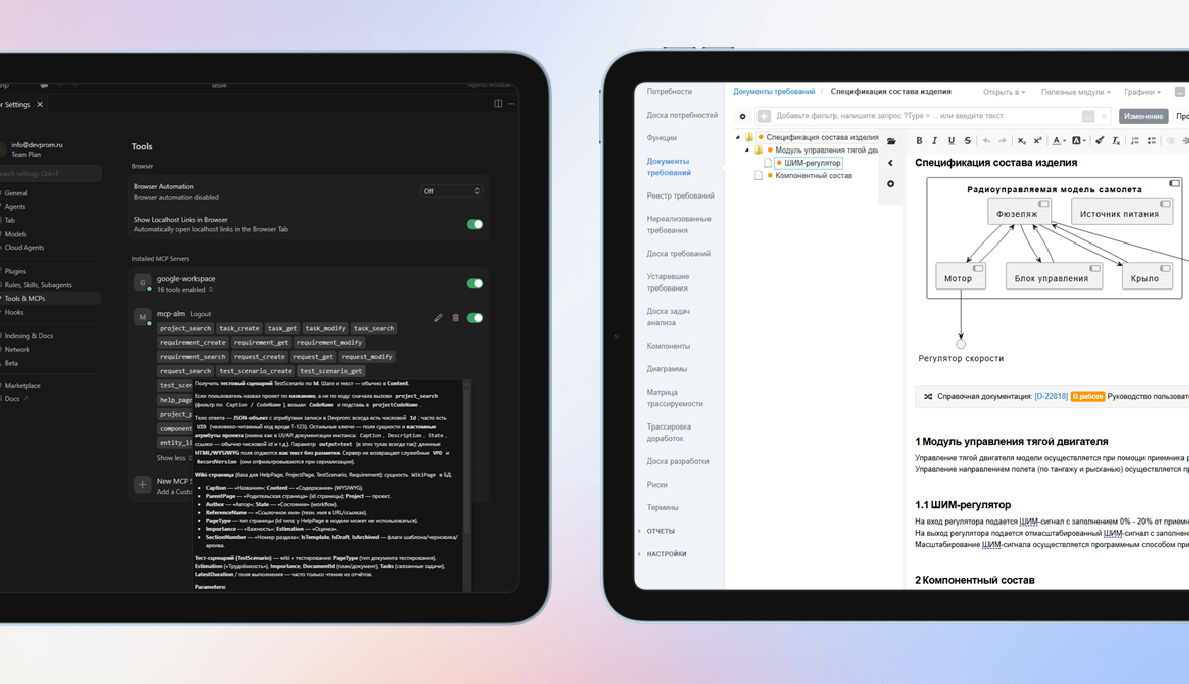
3.24. MCP server, RAG, forms
Semantic search for duplicates, analogs, and impact analysis using the built-in RAG engine with remote and local LLMs. A built-in MCP server hooks into AI agents and automates custom AI workflows. Rules can drive field visibility and required fields from other attribute values on forms. Saved custom filters speed up recurring queries. Bulk-create and bulk-remove traces between engineering artifacts.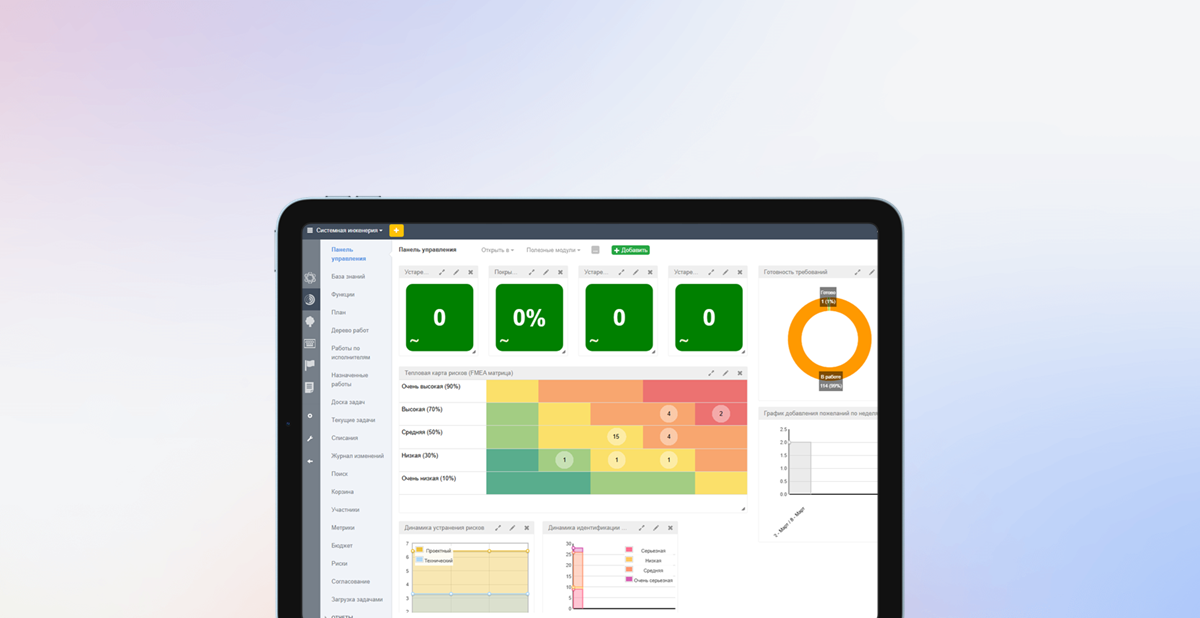
3.23. Risks and work calendar
Risk management adds a register, classification, links from risks to requirements, heat maps, and tracking of how risk parameters change over time. A Recycle Bin lets you park sensitive artifacts instead of deleting them outright. Calendars and work schedules fine-tune user and team availability so SLAs, shifts, and lifecycle metrics stay accurate.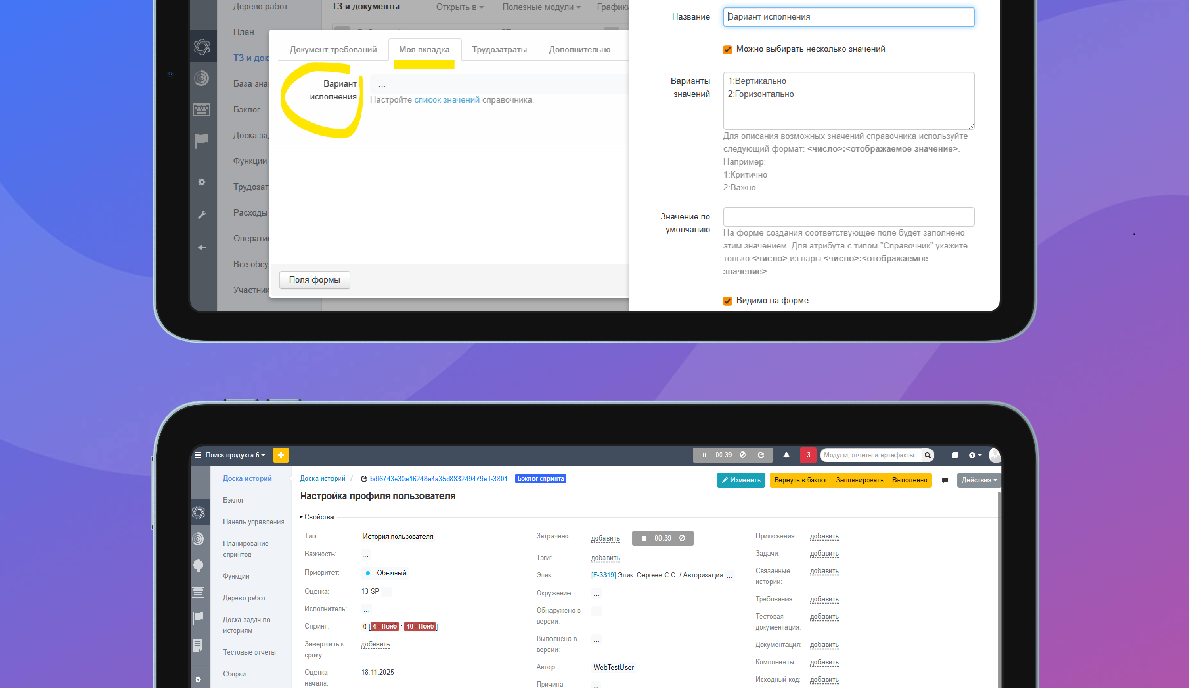
3.22. Working time countdown
Built-in timers capture effort when you switch tasks or complete test reports. Custom tabs organize system and user attributes on forms. Hierarchical iterations support arbitrarily deep plans, while dependencies between iterations keep rolling plans in sync with less manual work.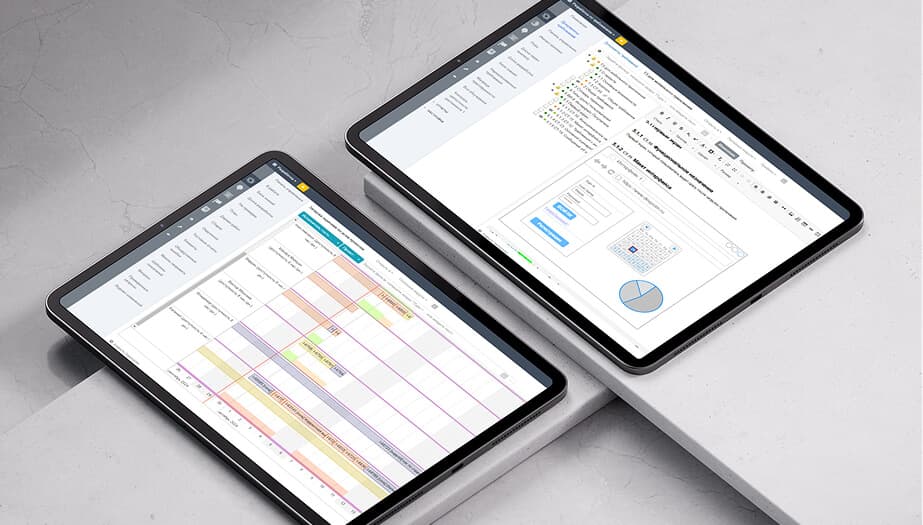
3.21. Project tree
The project tree summarizes large, deeply nested structures. New layout options include right-hand lists and grouping links into folders. Plan vs. actual analytics and historical charts (e.g., story and task owners) are easier to build. Documentation tables can pull parameters from the section where they are embedded. Git access now supports SSH keys.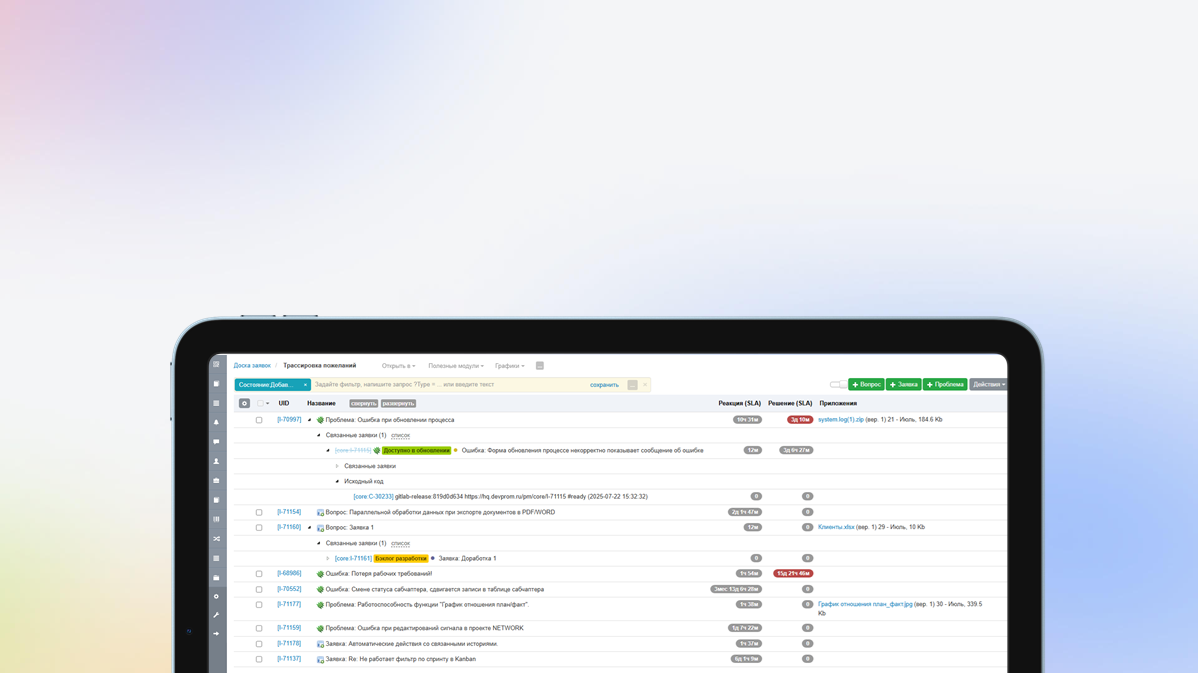
3.20. Hierarchical master data
In this version, users can create their own hierarchical directories, common to all projects or with their own data for each project. A new type of custom attribute has been added - File, which allows you to attach files to any entities. Implemented automatic authentication using domain login, without prior import of accounts. Added multiple selection of rows in views using Shift. Added the ability to link multiple commits to a build and much more...3.19. PostgreSQL support
In addition to the DBMS, MySQL and MariaDB added support for PostgreSQL. The DBMS is selected when installing the application. Scripts for migration from MariaDB to PostgreSQL are also provided. Improved performance and UX of comparing and merging baselines/requirements branches. Added support for links in UML and Draw.io diagrams. Added the ability to perform a targeted search for data in drop-down lists using search queries. Improved automation capabilities - setting valuescalculated based on formulas and much more...3.18. Automatic charts
Use automatic creation of class and component diagrams based on the component hierarchy, insert diagrams into documents. Use dashboards parameterized by a specific artifact, for example, test results by version for a specific test plan. Use visualizations of requirements versioning and other documentation to better understand branching. Connect S3-compatible storage to store binary project artifacts.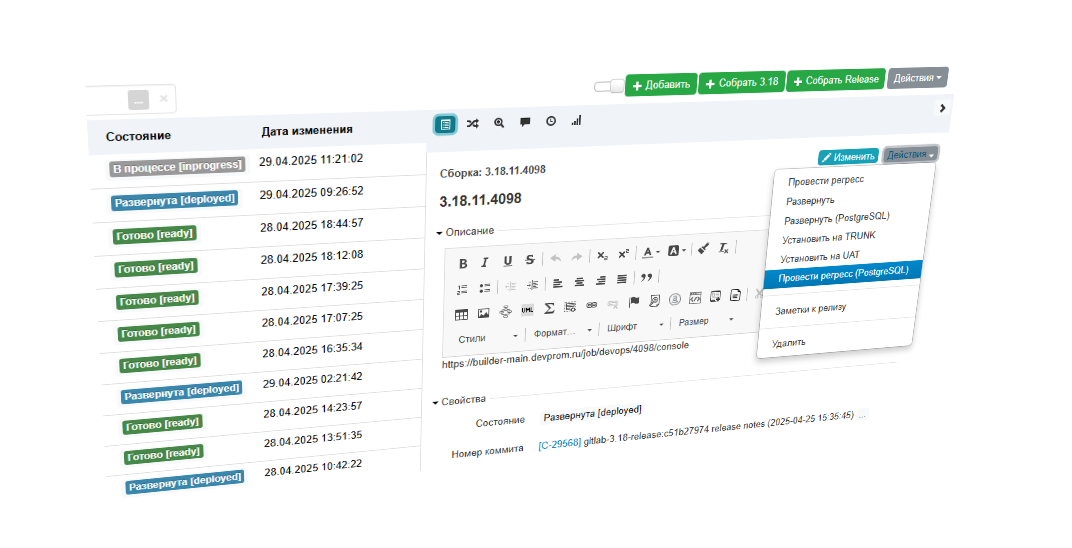
3.17. Custom Actions
Apply custom actions on project artifacts - execute scripts and send webhooks, for example, to run CI/CD tasks: running autotesting, creating assemblies, deploying, etc. Configure artifact UIDs in a convenient way using counters and calculated fields. Send any important reports via email on a scheduled basis. Keep records of employee absences and vacations to get a realistic project plan.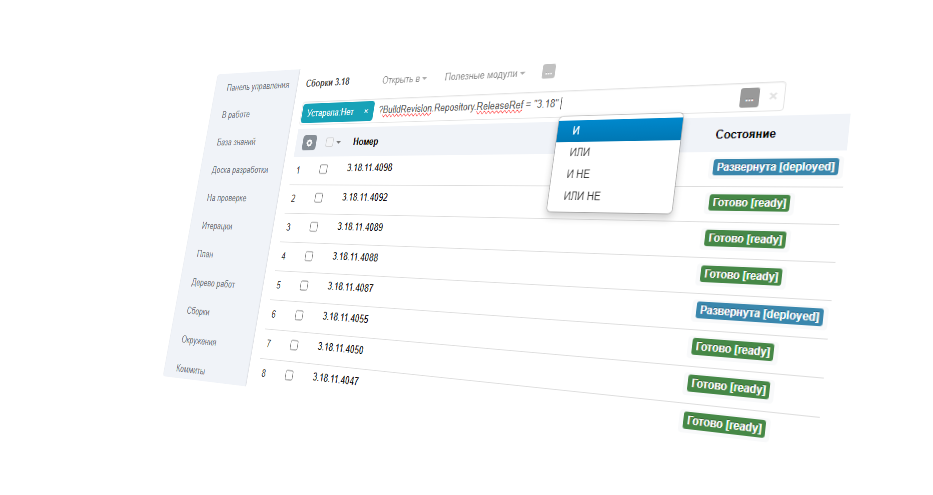
3.16. Built-in query language
To create arbitrary data samples in modules, reports and charts, use a flexible query language. Use more complex prioritization mechanisms such as WSJF (weight-based prioritization). Insert custom reports and modules directly into documentation to dynamically generate tables, traces, etc. Customize the UI to suit your requirements - click on the attribute name to configure its visibility, mandatory requirements, default values, etc.3.15. Script automation
The unlimited customization possibilities of Engio ALM are implemented using script automation - a mechanism that allows you to execute an arbitrary script as a result of events, according to a schedule, as a validation of values, etc. You can modify any data and request data from any external sources. When working with documentation, use Terms; the system will highlight the term and provide a transcript for interested parties. Identify duplicate or similar requirements and dependencies on the Similar tab.FAQ
Typical users include project managers, systems analysts, architects, developers, testers, technical writers, system administrators, and support engineers.
Spin up an instance in our cloud and start working today. Prefer on-premises? Download and install the application on your own server. You get a 30‑day trial to explore the full feature set.
Email info@engio.team with your question and contact details. Our consultants will get back to you with answers.
Explore the platform
See what Engio can do and whether it fits your delivery process—without a long sales cycle.